
Thursday 9th April 2026, 7:00pm to 8:00pm
Bayes Centre, Bayes Theorem, University of Edinburgh
Could gene editing transform the future of livestock farming? From avian flu–resistant chickens to animals better adapted to climate change, gene editing technologies could reshape animal health, welfare, and food security. But how does it work, and what are the ethical and policy implications?
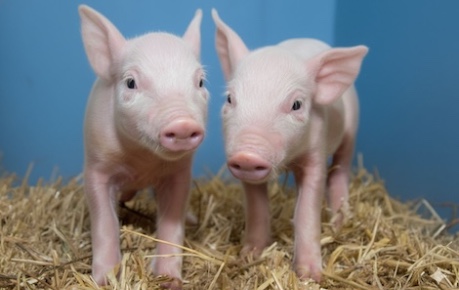
Join scientists from the Roslin Institute, alongside experts in animal welfare, global food systems, and farming, as they unpack the real science behind gene-edited livestock. With recent breakthroughs, such as the gene-edited pigs being approved for sale in the US, and the introduction of the UK’s Genetic Technology (Precision Breeding) Act 2023, now is the time to move beyond clickbait and understand what’s really happening, and what’s coming next.
This evening panel discussion, part of the Edinburgh Science Festival, is focused on the science and impact of gene editing in agriculture.
Panellists:
This is a fully interactive event: ask questions and use your smartphone to vote in live polls and share your views anonymously throughout the evening.
Whether you’re curious, cautious, or just keen to learn more, come be part of this timely conversation about the future of food and farming.
Suitable for Ages 12+
Roslin Innovation Centre
The University of Edinburgh
Easter Bush Campus
Midlothian EH25 9RG